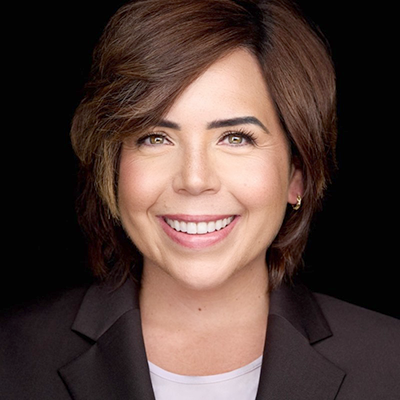
In this episode of the Greg and Camille Baroni Center podcast, host Mike Derrios speaks with Alexa Tsui, CEO of Forum, about evolving go-to-market strategies in government contracting.
Alexa shares her unconventional journey from English teacher to BD and capture executive, then discusses how COVID and AI disrupted traditional business development approaches. She emphasizes the importance of integrated storytelling, founder-led growth, thought leadership, and outcome-based positioning over capability-focused pitching. Alexa also addresses relationship-building, event strategies, RFI responses, and the risks of remaining stagnant in a rapidly changing federal acquisition landscape.
"All of those traditional GovCons that don't move and look alive and do things differently are going to be like Blockbuster in two years."
— Alexa Tsui, CEO of Forum
Episode Transcript
Mike Derrios 00:00:03 Welcome to the Greg and Camille Baroni Center Podcast, Inside the Business of Government: Where Policy Meets Practice. I'm your host, Mike Derrios, pulling back the curtain on how government really buys what it needs, from major systems to everyday mission essentials. Produced by the Baroni Center at the George Mason University Costello College of Business,.hear lively, candid conversations with the leaders and practitioners shaping federal acquisition. Let's get started. Hello to our listeners. Today I am welcoming Alexa Tsui, CEO of Forum, to the podcast. Alexa, how are you?
Alexa Tsui 00:00:40 I'm great. Thank you so much for the invite. I've been wanting to do this for a long time, and I was super flattered you asked and I'm happy to be here.
Mike Derrios 00:00:46 Well, I wanted you to come on the show because we're at a critical point in government contracting, and you've been at the forefront of this world for a long time. Why don't we just start there? How did you get into the government contracting space?
Alexa Tsui 00:01:01 Well, what a fun story.
Alexa Tsui 00:01:03 Sometimes I think back on the journey, I'm just like, wow, what a ride. So yeah, I actually jumped on the scene when I was about 27. So many, many years ago. I was hired by GovWin. Back then it was called Input and I was lucky enough to be on the Customer Success team, I came in from a totally different career. I was an English teacher for at the college level for like teaching English as a second language.
Alexa Tsui 00:01:49 That'll be great. And you know what? They were right. It was once I figured that out and paired it with the customer success thing and that that was kind of how I got my start.
Mike Derrios 00:01:56 Wow. Go figure. So there's a nexus to academia. I did not know that. Yeah. That's fantastic. Well, Alexa, today we're chatting about, winning the work. How the go-to-market has changed. And, speaking of educating, why don't you help to educate our audience on what, in your words, go-to-market really means? Because a lot of people have different definitions of it.
Alexa Tsui 00:02:20 Yes. And that's, Well, I think people have different definitions of BD and capture, too. I think that is the crux of the problem. right. When everybody has a different idea of what it is that we're doing here. So, I actually am a BD careerand capture-like executive. I've been doing that line of work almost my whole career after I left the market intelligence space. So, what happened was about, I think it was probably Covid when everybody stopped being in the office because that was really our, our, our way of doing BD and capture.
Alexa Tsui 00:02:50 We'd get badged in, we'd go see our customers, we buy Dunkin Donuts.
Mike Derrios 00:02:54 We walk the halls.
Alexa Tsui 00:02:54 Yeah, it was great. And you always, you know, hand out your donuts and find out about budgets and talk to your friends. And like, that's how the industry worked for so many years, right? And then Covid happened and we're like, oh, wow, we're not actually meeting people in the office anymore. How does this work? That was the beginning. And then in 2025, what people don't realize is that the whole procurement board of Monopoly was replaced. Like they literally pulled out that board and replaced it with this new game called Risk. Have you played that game – old school game – where you have to get little armies. And so, you know, I'm going to tie this back to your exact question, which is what is the definition. So, it is basically taking the siloed approach of responding to a bunch of RFIs, being really reactive. And then kind of like once you hear back on an RFI RFP, go, no, go.
Alexa Tsui 00:03:39 Then you push it into capture and then you put your team together and then you put your solutions together. So it's basically taking all of those actions and turning them into an engine rather than this leads to that leads to this leads to that. So it's more like, okay, taking a look at the way that Silicon Valley or commercial does it, right. Figuring out, okay, what's my ICP, which is my ideal customer profile. Right. And so that means that you have to get really mission focused. Like, what are we the best at delivering and where are the proof points in that? And then how do we tell stories with those proof points? Developing trust signals. And where do we put those. How do we approach the event space? What is the strategy behind our events kind of tactics? Right. And then it is I'm not saying get rid of your BD and capture folks, but like put them in an engine with the whole team and have the whole team working together, integrated, integrated, and then have this be a flywheel that's constantly feeding itself from the ops teams that are actually on the ground.
Alexa Tsui 00:04:38 Right. And one thing that people don't realize is like, whatever you're telling people when you're trying to hire them and whatever you're telling your PMs on the ground, is it the same story that you're telling the customers when you're going after work? That's the circle I'm talking about. That's the engine.
Mike Derrios 00:04:53 So so what's changed? I mean, you talked about how Covid threw us all the curveball and BD and capture, you know, pivoted slightly, but obviously the acquisition landscape, you know, has definitely changed. So many, so many things are different now. Contract consolidation, small business programs. Just a lot happening in this space. How should companies be thinking differently about going to market with that backdrop? I mean, is it the way you approach customers that needs to change, or is it more of an inward facing change that needs to happen inside of the company?
Alexa Tsui 00:05:34 I think it needs to be several things at one time. I think it needs to completely change. I think companies, especially the smaller mid-market companies, need to punch above their weight class and they need to really do, do a new, a whole new branding approach.
Alexa Tsui 00:05:51 And that's part of go-to-market, Honestly, is like the Stratcom, the branding. And then how does that feed into your pipeline? Right. So, one of the things that we do at Forum is we take your pipeline and we run it through our Stratcom view. And if your Stratcom isn't matching your pipeline, then we change it. We change your capability statements. We change your decks. We change everything. So that way it's all everybody's singing from the same sheet of music. One of our customers was like, hey, I asked the three different people in the room, what is it that you all do for the government? Three different answers. We're talking about.
Mike Derrios 00:06:24 Three?
Alexa Tsui 00:06:24 People, same company. And so it's like getting everybody on the same page about what kind of company this is. What is your value statement to the government? What do you do the best and how can you really get that signal out in front of the government more. But that's all internal work that you need to do before you ever get in front of a customer, right? And the problem is, is that so many of these companies are a little bit half baked and they're like, just run down the street with it, like just just let's go run down the street with, you know, what it is that we think we do.
Alexa Tsui 00:06:52 But then you've got people on the ground saying something different, this guy saying something different. And so it's really trying to just get everybody on the same page on, you know, singing from the same sheet of music and then making sure that that delivery matches it.
Mike Derrios 00:07:05 Yeah. I think that's such a good point. you know, how you tell the story is critical, but what the what's your story, right? I mean, you know, when I was on the government side, I obviously had a lot of meetings with a lot of companies, over a 30 year career. And, you could always tell the companies that were prepared for, for, I mean, just getting getting the calendar space is tough, you know.
Alexa Tsui 00:07:31 Especially with you. You were one of the hardest government meetings to get.
Mike Derrios 00:07:33 Yeah. Good. Good to know, good to know. The people thought that, yeah, it's tough to make, you know, the time to talk to companies. But, when you give them that platform, the expectation is, hey, you've done your research.
Mike Derrios 00:07:48 You've thought about my mission challenges. You've tracked the signals, you know, you've tracked the signals. You know where the budgets are going. You know how the money is flowing inside of the agency. You know who the powerbrokers are, who the decision makers are. and you know that this is just the first meeting of, you know, hopefully a couple that will lead to maybe something that looks like a technical briefing or a pilot or a demo so that you can show me what you got. Right. And, and companies that aren't prepared for that and just think that, well, I, I'm, I'm coming in to pitch my cape statement and tell you about how, you know, patriotic I am and I want to do business with the government I that's not go-to-market.
Alexa Tsui 00:08:34 No it's not, it's not at all.
Mike Derrios 00:08:36 It lacks the thought leadership.
Alexa Tsui 00:08:38 Right. And that's and I want to come back to like the the zeitgeist of where we are. Right. So as a watershed moment of AI also changing the way that industry is responding to government proposals right there, using AI to write proposals and unfortunately without a lot of changes to it.
Alexa Tsui 00:08:55 Right. So we get all these proposals that look exactly the same. But but what's going to start winning, Mike, is storytelling. And I love that you brought that word up because that's a big thing for us as well, is like, let's get your story straight and it starts with you. Like, and why would somebody buy from you? And that's why I brought one of the best branding companies in the country to come work with forum was because I needed his brain about the buy psychology. Right. What what is it about your company that's different from the 72,000 other services firms out there that look and smell just like your firm, right. How do we get that story? Right? Yeah. What does that look like? You know, and so there's a lot that these small and mid markets and you know the big companies have been doing this right I don't think I need to tell Leidos how to go to market. Right. Leidos has been going to market for a while. Right. Right.
Alexa Tsui 00:09:43 But the small and mids and even those those bigger mid companies, I'm not going to name anybody, but they need the help the most because they're the ones who are really going to struggle in this new space.
Mike Derrios 00:09:55 Yeah, it is a new space. you know, I think companies are being asked, given companies are being asked to think like commercial companies for the first time, frankly. And there might be an overreaction to, you know, what that looks like. Well, well, maybe we need to invest more in our capture teams or our BD teams or maybe less. Or, you know, what do you think about that? I mean, how how do companies need to be, acting more like commercial firms in this space?
Alexa Tsui 00:10:26 Yeah. If you were, you know, even paying half attention in 2025 and watching Palantir come in and just eat the lunch of, you know, a lot of government companies. And what does that mean, though? What signal is that giving folks in not just Palantir either? There's a lot of other Silicon Valley type of companies that are coming in, and really they lead with innovation.
Alexa Tsui 00:10:45 They lead with the outcomes. And that is the answer to your question. It's like you're no longer leading with the capabilities. You're leading with the outcomes, right? And those commercial companies, they have always done that. They're go-to-market means lead with your outcomes. Lead with why somebody wants to hire you. And I think that for most of GovCon they lead with their capabilities. They lead with their experience, lead past performance. You know you can call up this other customer but they're like I don't care about any of that. Like we want to move differently. We want to buy differently. We want to buy with CSOs and OTAs and betas. And that's a whole different way of moving. So then how are you then going to get agile? And so I have a I have another friend who's taking this new role. And she was like, she's taking the in HR role. And she was she's like, I got in there and they are $400 million company have never changed their hiring processes in 15 years.
Alexa Tsui 00:11:36 Wow. So it starts inside. It starts with your your culture basically like how do you get the culture to be like look alive GovCon look alive.
Mike Derrios 00:11:47 Yeah, yeah. I love that you said that. Not to plug Baroni Center too much, but we are doing a white paper on this very topic about operating models, in the GovCon space and how they need to change. That's going to be coming out soon, you know. So, you talked a little bit about, you know, different, different ways to access the market. Let's, let's pull on that thread a little bit. So, there are different ways now. There are OTAs when the agency has OTA authority. I always, I always have to preface that, a lot of people are talking about OTAs and they don't realize, well, that agency actually doesn't have the authority to do an OTA. But, you know, CSOs, cyber is, you know, starting to heat up a little bit. so that takes me to shaping.
Alexa Tsui 00:12:33 You know.
Mike Derrios 00:12:34 How can companies, effectively shape opportunities and in today's market and, and can you elaborate a little bit for maybe, you know, especially the micro company that doesn't even understand what that concept is just yet. What does that what does that mean to try to shape an opportunity?
Alexa Tsui 00:12:51 I'm going to give you two different examples. One of my customers, you know, they they did some really kind of unique cool work with CBM civic type of stuff. Right? And especially on the consulting side, like helping the government understand what IT systems you have and what should be sunset and what should be brought in and what's the usage across and all that stuff that's very still hot, even though some, you know, folks might think it's all dead. Trust me, it's not. that what I told her was like, hey, I was reading a GAO report, you know, like one does in their free time. And that report was.
Mike Derrios 00:13:24 Oh, wait, are you a GovCon nerd? Just admit it on this podcast.
Mike Derrios 00:13:27 Are you a GovCon nerd? All right.
Alexa Tsui 00:13:29 I think we should have our own version of Jeopardy just for gov nerds to go and play and feel smart because yes, I was reading a GAO report and it was it was an agency getting literally roasted, roasted, for not having their CBM and civic ducks in a row, and I told I basically pulled it up and said, let me show you the best way to tell the future is to create it. Read this GAO report. It has two points of contact at the bottom right. Write a capabilities white briefing, White Paper briefing to this GAO report. This is what's keeping the CIO up at night. I'm telling you, he's getting roasted on this publicly. You know, he's the one who's being brought to the carpet for this, right? This for him. But then also figure out who's the CBM civic lead in the company in the agency and then write it for that person as well. Get both of them on an email thread and get it out there.
Alexa Tsui 00:14:15 And that's how you create an opportunity.
Mike Derrios 00:14:18 Exactly. Yeah. It goes back to the point I was trying to make earlier about, you know, learn my mission. Yeah. You know, learn my mission, understand what my technology challenges are. Understand what's keeping me up at night and what, you know, Congress is paying attention to at my agency. and figure out how you can help me to solve problems that I haven't defined yet.
Alexa Tsui 00:14:39 Yes. And that's the key I haven't defined yet. So another thing I always try to counsel my customers on is if you see an RFI.
Mike Derrios 00:14:48 Oh yeah, I was going to ask you about this.
Alexa Tsui 00:14:50 Give them an unsolicited proposal immediately. Give them the keys to something you've already built. Say, I saw your RFI and I responded, make sure you do that part. I responded to it, yes I did. Also, I actually have something ready for you right now. I built it all out based on what you had put in the RFI. I had dummy data in there.
Alexa Tsui 00:15:08 Can I get 30 minutes of your time to walk you through exactly what you need?
Mike Derrios 00:15:11 Love it, love it. Let me. So, I was going to ask you about that. yeah. I hear debates among companies about whether or not they should invest in responding to Rise. I I'm going to withhold my opinion. I want yours first.
Alexa Tsui 00:15:29 it's funny too, because it's recently changed. And I was so well known for saying what I used to say, so I'll tell you. Even me, I'm evolving, right? So at first I was always like, look, as a small business, you have to, you have to get your name out there. You have to be submitting these RFI. But then AI popped on the scene. Enter the chat. And I'm not saying just enter all these. Put in all these RFI that look like nonsense. Like don't do that. I actually have seen some where the government came back to a small business and said, oh wow, is this you said that you did all these things. Show me.
Alexa Tsui 00:16:00 And the company was like, oh, we never even read that RFI when it went in. You know, that's what it's exactly not to do.
Mike Derrios 00:16:05 Right, right.
Alexa Tsui 00:16:06 So what I'm saying now to everybody is I want you to be invested. So when you pick an RFI and you decide to respond to it, be ready for that unsolicited proposal. Be ready to go meet with the government. Be ready to go all in on this deal. Because why should the government go all in on you if you're not going to go all in on them? You're teaching. You're you're you're basically treating them like the way that you don't want them to treat you, but you are doing the same thing.
Mike Derrios 00:16:28 Yeah, yeah, yeah. We talked a little bit about risk or maybe we were we were talking about risk on the way up to the studio. How do you think companies should be thinking about the risk calculation in today's environment? I mean, especially with regards to fixed price contracts and, you know, the mandate to move in that direction?
Mike Derrios 00:16:52 You know, I know this is a go-to-market discussion, but I think risk plays into that calculation for companies.
Alexa Tsui 00:16:58 I think we're at such a watershed moment for GovCon that the real risk is you acting the same and doing the same, that you will go out of business. All of those traditional GovCons that don't move and look alive and do things differently are going to be like blockbuster and like two years. Yeah. So that's the biggest risk honestly. But let me ask, answer your actual question, which is around like firm fixed price and the risk perception. And by the way a lot of this risk is around perception. So, and there's a new problem that pops up with the firm fixed price move. So, I think what I love the move to the firm fixed price. And I think most contractors know especially software development contractors know that's a better way to be, as long as you have a defined definition of done and you have a sprint cadence and good relationships with your cause and customers, then firm fixed price works in your favor because you can put the teams together and the sizes that you need to be able to execute what you need to do.
Alexa Tsui 00:17:53 You can size up, you can size down, you can make it kind of work to deliver the work you have to deliver. Now it gets tricky when the government buys firm fixed price and you put an AI accelerator in there that saves a ton of time, are you going to still be billing for those hours that never actually worked? Even though it's a firm fixed price? It goes in the face of entire model of what government has bought forever, right? It changes everything. So I had a big panel a while ago and my good friend Don Bower, who is you probably know him too. He's very famous, I love him, he's so opinionated and he was speaking from his perspectives on some of these things. And he's like, it's really tough for the government to buy outcomes because we've been buying labor.
Mike Derrios 00:18:35 I would agree. Yeah, absolutely.
Alexa Tsui 00:18:36 So how do we buy outcomes when we've been buying labor? And what do we do with this risk profile?
Mike Derrios 00:18:41 Absolutely, yeah. I think a lot of companies are coming to that realization or should be that bespoke labor is is not what the government is interested in buying.
Mike Derrios 00:18:50 You've got to even if it looks on paper like a staff augmentation contract, I promise you it's not. They're asking you to develop capabilities, you know, give them a capability platform in addition to the people that are there. That's a great point.
Alexa Tsui 00:19:05 And then how do you price it?
Mike Derrios 00:19:06 Oh, yeah.
Alexa Tsui 00:19:07 Oh, yeah. And then and then from like a and then the, the more interesting, exciting question we had that that whole panel was at a law firm. And I had a lawyer on the panel as well. What do you do with the data rights? Who owns that tool? Does the government? Is it a goddess? Is it a goddess? Is it in between? Like, is there a thing in between?
Mike Derrios 00:19:22 Oh, we could we could go in a completely different. Have a have another episode on commercial.
Alexa Tsui 00:19:28 Oh, yeah. We totally could. So that's a whole other thing.
Mike Derrios 00:19:31 Yes it is. You know, I'm actually we're probably going to be putting an article out soon about, you know, the need for hey, if you want to buy commercial, there are some behavior changes that come along with that on the government side, because you now have to adapt to what commercial pricing really means, and that that may not be as easy as as some agencies think.
Mike Derrios 00:19:55 I want to come back to, to the relationship aspect of go-to-market. you know. How can agencies and companies find the ability to communicate again? Because I think that some of that has, you know, you had Covid and then, you know, a lot's happened in the workforce. I think a lot of companies are trying to figure out who's left, and the government, who can they talk to? Who should they be talking to? How are you advising companies as they're thinking about go-to-market in terms of just, you know, identifying the right people to, to build relationships with?
Alexa Tsui 00:20:33 Right. So one of forum's most popular offerings is Our Access and Influence, which is the first part of that starts out with like an events scan, right? And some of these events, I'm not going to lie to you. I've been in this industry for a long time. Some of them are boondoggles. They really are. But that's kind of the point because the government comes to these boondoggles, and then you can really have offline conversations with the government and talk to them and get to know them and understand who they are as humans.
Alexa Tsui 00:20:57 And this is such an important element of this whole thing that we're doing here. Right. And so I actually did a training for the Department of Transportation earlier this week. About over 100 acquisition officers and course were on the call, and they asked a very important question at the end. And because they asked it, it really changed my perception of this question. And they asked, we really want to attract more small businesses to work with the Department of Transportation. What can we do? And I was like, guys, from the outside perspective, it's looking real chaotic, right? You'll put something out over here, it'll completely disappear. It'll pop up over here with no communication. We need early and often communication. Do a draft RFP. Do Q&A before the final like step through the acquisition steps from jump and follow them. You know exactly how reverse industry days have everybody come in and meet with your forecast leads to meet with your program offices and walk through what's going to be coming down the pipeline.
Alexa Tsui 00:21:54 The more you can tell us what's coming, the more we can prepare as better partners for you. Right? And so that was kind of my message to them. And I feel like industry has the same question. Yeah. Right. So like we really you need to be bringing government and industry together. So I'm going to be speaking to the World Congress in Orlando. I don't know who put it in Orlando for the end of July. That was crazy.
Mike Derrios 00:22:17 It's going to be a little toasty. Yeah, yeah, yeah.
Alexa Tsui 00:22:20 But I, I downloaded the app yesterday and I started looking at who is attending it, and I was like, I don't know why all of government kind doesn't come to this conference. Acquisition officer, acquisition officer, core, core, core, core, core, core! Are you kidding me? There's more buyers corralled in one conference than I've ever seen in my entire career. Like so get out there. Get out there to the right conferences with the right event strategy. Who are you meeting? What are you talking to them about? What is your approach? And by the way, does your capability statement look like trash? Like hot trash? Does it look like it was 1982 called once their capability statement back? And if it does call me.
Mike Derrios 00:22:56 I that's you're going to make me laugh. I'm trying to try and have a straight face here. That's a good one though, because a lot of companies just they struggle with some of the basics, like what's the takeaway, what's, what's the, the last thing that you're going to, you know, leave on the table before you leave, before you, you know, exit that meeting. That's critical. That's critical. And frankly, I mean, this is you know, this podcast is about being real. You know, I, I will tell you, the vast majority of capability statements, saw the the circular file on the, you know, on the floor there, the trash can because, they just they didn't tell me anything. You know, or they told me too much, as in, hey, I can give you the world, right? And you didn't offer any specialized expertise that would be pertinent to, you know, what my particular mission was? So. Yeah. yeah.
Mike Derrios 00:23:50 I think getting into the event space is critical for companies. What do you think about, how companies should be positioning themselves with thought leadership and, and how do they do that in a way where it doesn't come off as too self-promotional, you know? Does that make sense?
Alexa Tsui 00:24:06 Yeah. No, this is a really good question. And another one of Forum's offerings is founder-led growth from like LinkedIn and also other like on your website. Right. Having the blog section there and the LinkedIn and then your capability statement. All of these things need to be saying the same thing, right. But founder-led growth is another Silicon Valley term. And if you apply it to governance, which we've been doing, it's it's really like how do you tell the stories that makes the government care about why you care? Right. So, I have a customer that I do this with, and he's he's a former Navy cryptologist, and he always brings that up in his posts. And it means something. It means that he cares about the data.
Alexa Tsui 00:24:47 He cares about the access. He cares about, you know, different things than me. Alexa Tsui, my LinkedIn presence is like people like, yeah, she likes hip hop. She also likes country music. She's crazy. She doesn't mind being a little too authentic on LinkedIn. Right. But I also talk a lot about go-to-market. And I think, when it comes to the founder-led growth, it's not just what you put on your own LinkedIn page. It's like, what are the comments that you're leaving on other pages? Right before we walked in here, I saw one of the comments I made yesterday night has almost 2000 views on just one comment. It was about go-to-market, you know, and so I think you have to figure it out. Again, it goes back to that. What is your story? What is your Mike Derrios story and how do you keep that consistent and out there and relevant?
Mike Derrios 00:25:28 Yeah. So I if you had to give a company, you know, one piece of advice right now, you know, and you just, you know that they're going to walk away with that, that one, you know, sound bite.
Mike Derrios 00:25:42 What would that be?
Alexa Tsui 00:25:43 That go-to-market is a movement. And if you're not moving, you'll be left behind.
Mike Derrios 00:25:48 Oh wow. Yeah. That's powerful. That's powerful. So so I think we're we're coming up on the the close of our time together here. so we're going to start a little tradition with this podcast. and you are, in fact, our first guest, by the way.
Alexa Tsui 00:26:04 So honored. Thank you.
Mike Derrios 00:26:07 The purpose of the Beroni Center is to really serve as a bridge between government, industry and obviously, academia. and I would also offer, you know, the everyday citizen, you know, because a lot of people still don't understand this huge industrial base and the impact that it has on the American economy. and so, so we're, we're we're trying to be that bridge. And so at the end of each podcast, we want to offer a bridging question. It's an opportunity for the current guest to leave a question for the upcoming guest.
Alexa Tsui 00:26:46 Oh, I love this.
Mike Derrios 00:26:47 Yeah.
Alexa Tsui 00:26:47 Who's the upcoming guest?
Mike Derrios 00:26:49 You don't get to know that. Oh, wow. That's that's part of, And I'm going to use one of your phrases. I say GovCon a lot. You say GovCom with an m. Explain that really quick. I know, I know why you do that. But explain that really quickly for people.
Alexa Tsui 00:27:05 Yes. So, so the word GovCon used to get under my skin and I never could figure out why until I had one gobby friend who's still a very good friend of mine and he said, you know why? It's because it sounds like you're only talking about the contractors. When we are in this together. We are a gov government community. Yeah. And so that's where the word GovCom came from. And we kind of founded that coined that word together.
Mike Derrios 00:27:26 I think that's great. I think that's great. Well, and the spirit of, you know, bridging the GovCom, we we'd like to, to give you the opportunity to leave a question for the next person and kind of help us to, to put those planks in place for this bridge.
Mike Derrios 00:27:48 in general, the question is: What should, what should government, contracting people, whether they're on the government side of the house or the industry side of the house, be thinking about or caring about in this moment in time?
Alexa Tsui 00:28:08 So my question should revolve around that.
Mike Derrios 00:28:10 Yes.
Alexa Tsui 00:28:11 Yeah. I think my the question that we didn't really talk about today, although could be a whole other entire podcast, was the small business market. So my question for your next guest is: What is happening and how do you advise small businesses on their next steps when they feel like their entire presence is unwanted?
Mike Derrios 00:28:31 Powerful. Powerful. So I think, Say again. Oh, take the glasses off. I think that wraps us for the day. Alexa, thank you so much for joining us on the Baroni Center podcast, and we look forward to entertaining your future appearance on the podcast. Again, thank you so much.
Alexa Tsui 00:28:57 Absolutely, Mike, thank you so much.
Mike Derrios 00:28:58 Take care.
Mike Derrios 00:29:02 You've been listening to the Greg and Camille Baroni Center podcast, Inside the Business of Government Where Policy Meets Practice.
Mike Derrios 00:29:09 If you enjoyed this episode, subscribe to our list and join us for more insights into evolving government procurement. Go to govcon@gmu.edu. That's govcon@gmu.edu. Thanks for tuning in.
In This Story
About the Guest
Alexa Tsui, CEO of Forum. Tsui leads FORUM as the home of modern federal contracting – the bridge between government leaders and the industry that serves them.